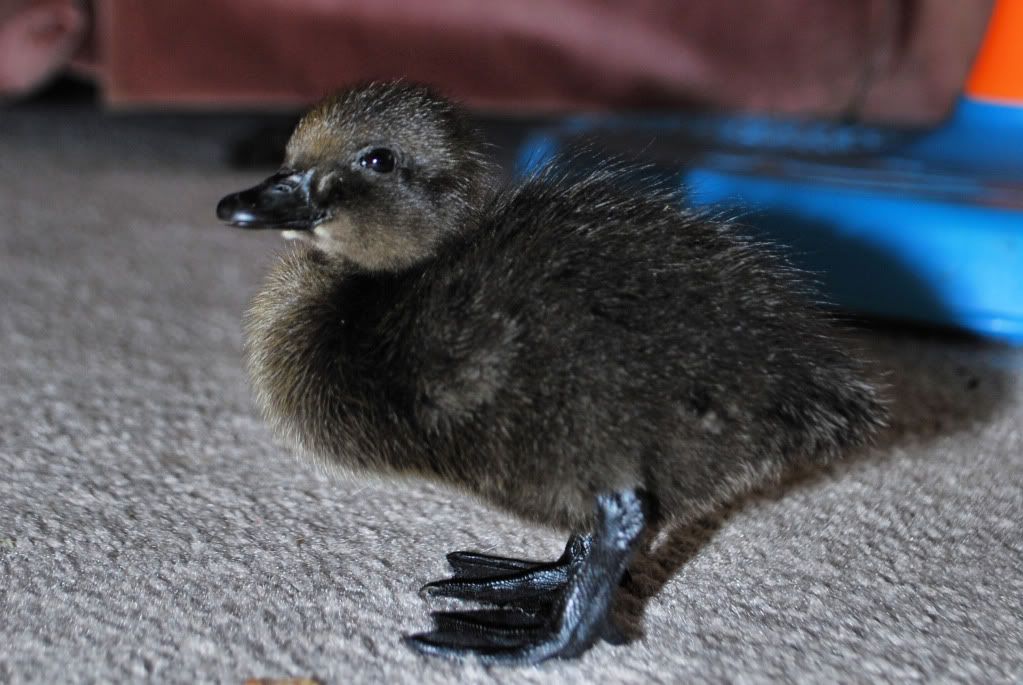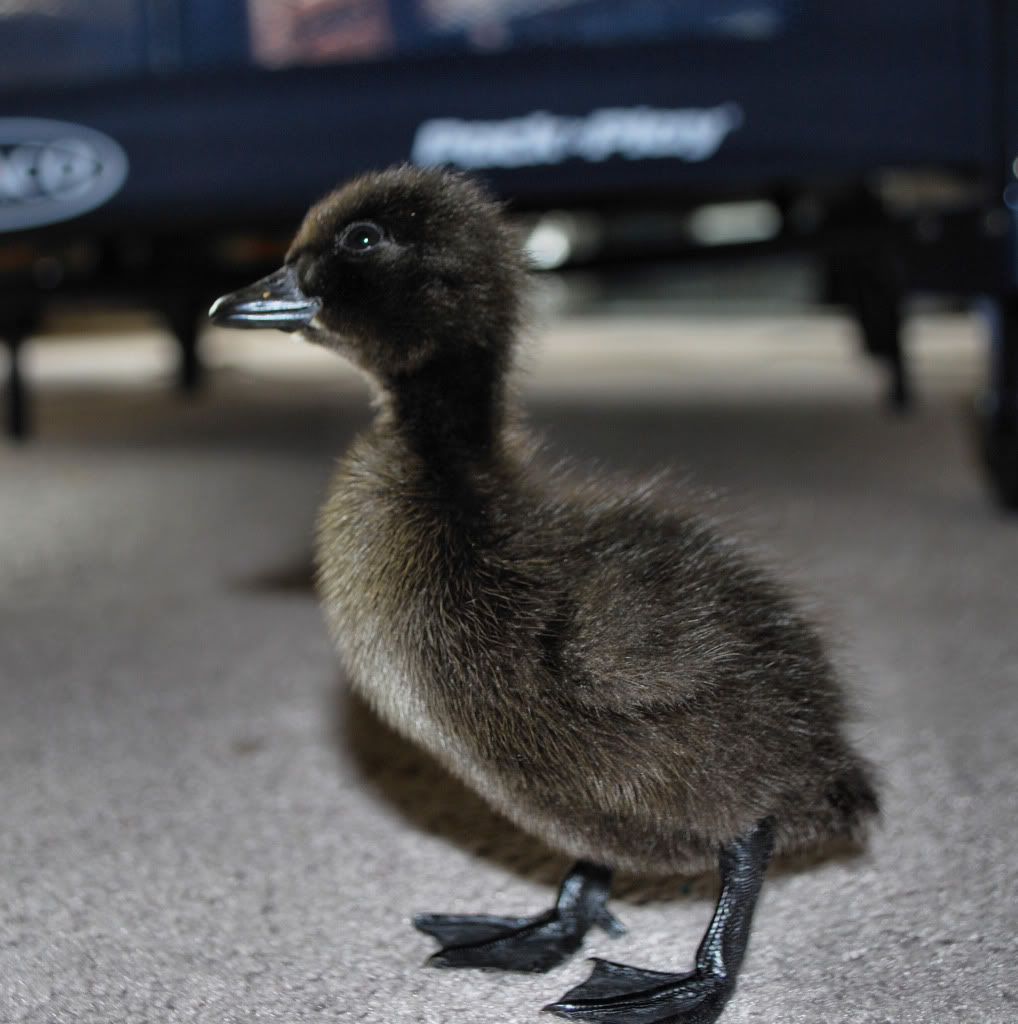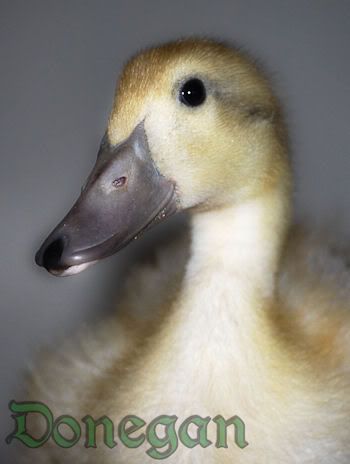
Donegan keeps getting sweeter and sweeter. Welsh's are definitely my number one breed to recommend. He got a bath upgrade and needs one again already! He's getting big. He's convinced he still fits perfectly on my shoulder and in my hand. lol. He also started wearing the next size up in training diapers. My eyes could be playing tricks, but it seems as though his walk is a bit off... maybe too pigeon toed. I'm going to look into it, but regardless it doesn't seem to bug him. He's a poopin machine! SURPRISE! Looking forward to less poop after his feathers are in. They are on their way... looking less like feathers and more like spikes. Gotta love that awkward stage. He's still quite photogenic, but we will see if that still stands next week!! :D His beak is slowly getting lighter. Welsh Harlequin males have a dark beak when they hatch, which lightens and turns yellow over time. The femals are born with a light beak that darkens with age. This is why most breeders consider welshs the easiest to sex at hatching. I did a supervised cat/duck meet n greet with donegan in his cage. YUP... the cats were terrified of him. lol I'll be looking for a medium there. I really need to get some orders in for juvenile and adult diaper harnesses, but it's hard to guess the size =/ We removed the heat lamp, but have the heat turned up in the house. Other than that and upgrading the size of his food and water dishes, nothing new :)
Showing posts with label 3. Show all posts
Tuesday, February 7, 2012
Week 3 Donegan Update
Donegan keeps getting sweeter and sweeter. Welsh's are definitely my number one breed to recommend. He got a bath upgrade and needs one again already! He's getting big. He's convinced he still fits perfectly on my shoulder and in my hand. lol. He also started wearing the next size up in training diapers. My eyes could be playing tricks, but it seems as though his walk is a bit off... maybe too pigeon toed. I'm going to look into it, but regardless it doesn't seem to bug him. He's a poopin machine! SURPRISE! Looking forward to less poop after his feathers are in. They are on their way... looking less like feathers and more like spikes. Gotta love that awkward stage. He's still quite photogenic, but we will see if that still stands next week!! :D His beak is slowly getting lighter. Welsh Harlequin males have a dark beak when they hatch, which lightens and turns yellow over time. The femals are born with a light beak that darkens with age. This is why most breeders consider welshs the easiest to sex at hatching. I did a supervised cat/duck meet n greet with donegan in his cage. YUP... the cats were terrified of him. lol I'll be looking for a medium there. I really need to get some orders in for juvenile and adult diaper harnesses, but it's hard to guess the size =/ We removed the heat lamp, but have the heat turned up in the house. Other than that and upgrading the size of his food and water dishes, nothing new :)
Monday, May 9, 2011
Friday, April 22, 2011
Cayuga
What is a Cayuga Duck?
From Wikipedia, the free encyclopedia
Cayuga Duck
A Cayuga Duck is a breed of domesticated duck used for egg and meat production as well as an ornamental bird. The Cayuga name is taken from Cayuga Lake , one of the lakes in the Finger Lakes chain, in New York State where the breed was popularized. The traditional story for the development of this breed is that a miller in Dutchess County captured two wild black ducks and used pinioning to keep them at his pond. The offspring of this pair was prized for flavorful meat and breeding efficiency.[1]
The Cayuga breed is in the Medium class and has been a recognized breed of the American Poultry Association since 1874. the standard weight for adult males is 8 pounds and females 7 pounds. The Cayuga are characterized by a black bill and black plumage which is an iridescent beetle green in the correct light. In breeding an emphasis is put on correct coloration, carriage and a large breast. The Cayuga duck has dark brown eyes, black shanks and toes, except in old drakes where some orange shading may appear. Ducklings have black plumage. For exhibition presence of white color in the outer plumage is a disqualification. It is also well liked by many as a great yard pet as they tend to stay close to home.
For those who wish to keep ducks, but live close to others that would make keeping the Pekin breed impractical because of the loud quack, The Cayuga duck may be an alternative as its quack is not as loud or frequent as the Pekin. The temperament of the Cayuga is docile.
Adult Cayuga Ducks enjoy eating snails, slugs, and most other insects.
The Cayuga duck will more often sit on and hatch her eggs than other domestic breeds of duck. Incubation for the eggs is 28 days. When using an incubator the temperature should be 99.5 °F at 86% humidity for days 1-25, and 98.5 °F at 94% humidity for days 26-28.
This breed of duck is listed as threatened by the American Livestock Breeds Conservancy. [2]
http://en.wikipedia.org/wiki/Cayuga_Duck
Click Here For More Cayuga Duck Photos on Flickr.com
From Wikipedia, the free encyclopedia
Cayuga Duck
A Cayuga Duck is a breed of domesticated duck used for egg and meat production as well as an ornamental bird. The Cayuga name is taken from Cayuga Lake , one of the lakes in the Finger Lakes chain, in New York State where the breed was popularized. The traditional story for the development of this breed is that a miller in Dutchess County captured two wild black ducks and used pinioning to keep them at his pond. The offspring of this pair was prized for flavorful meat and breeding efficiency.[1]
The Cayuga breed is in the Medium class and has been a recognized breed of the American Poultry Association since 1874. the standard weight for adult males is 8 pounds and females 7 pounds. The Cayuga are characterized by a black bill and black plumage which is an iridescent beetle green in the correct light. In breeding an emphasis is put on correct coloration, carriage and a large breast. The Cayuga duck has dark brown eyes, black shanks and toes, except in old drakes where some orange shading may appear. Ducklings have black plumage. For exhibition presence of white color in the outer plumage is a disqualification. It is also well liked by many as a great yard pet as they tend to stay close to home.
For those who wish to keep ducks, but live close to others that would make keeping the Pekin breed impractical because of the loud quack, The Cayuga duck may be an alternative as its quack is not as loud or frequent as the Pekin. The temperament of the Cayuga is docile.
Adult Cayuga Ducks enjoy eating snails, slugs, and most other insects.
The Cayuga duck will more often sit on and hatch her eggs than other domestic breeds of duck. Incubation for the eggs is 28 days. When using an incubator the temperature should be 99.5 °F at 86% humidity for days 1-25, and 98.5 °F at 94% humidity for days 26-28.
This breed of duck is listed as threatened by the American Livestock Breeds Conservancy. [2]
http://en.wikipedia.org/wiki/Cayuga_Duck
Click Here For More Cayuga Duck Photos on Flickr.com
Subscribe to:
Posts (Atom)